
“Once we accept our limits, we go beyond them.” – Albert Einstein

When I first came across that quote, I did not understand it. I had spent most of my life thinking that I needed to believe the opposite: that limits were things I needed to overcome, anxiety was a weakness, and I just needed to fix myself.
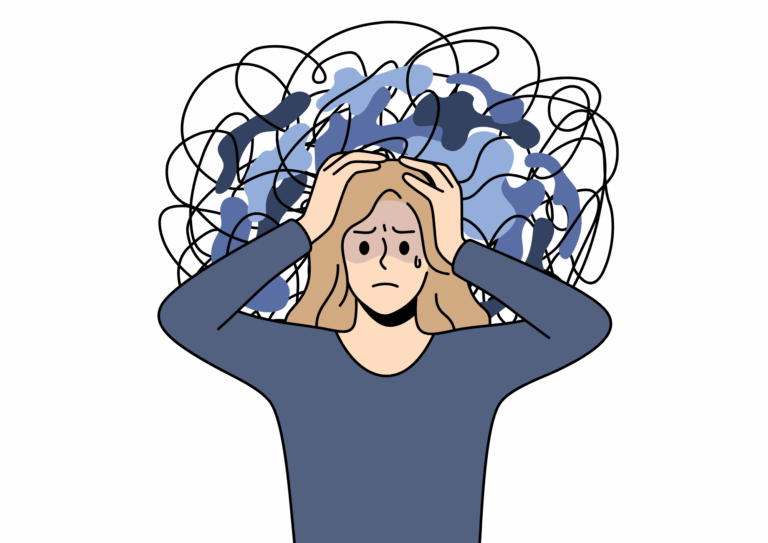
Throughout my teens and into my twenties, I carried this belief that I had to face my fears head-on. That pushing through was the only way to survive. I read the books everyone reads, and Feel the Fear and Do It Anyway became the go-to guidance for anxiety. But I could never quite manage it. I tried, failed, tried again, and failed harder. I ended up doing what so many people with undiagnosed anxiety do: I self-medicated. Drinking, comfort eating, and avoidance. It became a cycle I could not escape.


I still remember one psychologist saying to me, “Most pubs these days are full of men with undiagnosed anxiety conditions.” That hit me. I knew he was right, because I was one of them.
I was diagnosed autistic at 30. I had hoped it would bring clarity, but it brought more questions. I did not “look autistic”, and that confused me, even made me question the diagnosis at times. But somewhere deep down, it made sense. The constant overwhelm, the masking, the meltdowns I could not explain, the sensory issues that ruled my day, all of it suddenly had a name. Still, I did what I had always done: I tried to beat it.

The Scotland Trip
We planned a trip to Scotland. I told myself this was my moment to prove I could do it. I was going to face the fear and overcome it. We drove for hours, and when I arrived, I genuinely felt like I had won. I was dancing around the Highlands thinking I had conquered my anxiety. But it all came crashing down just a day later. The distance from home, the overwhelming feeling that I could not get back—it hit me hard. I had a full breakdown. We cut the trip short and came home. It was one of the lowest points of my life. Not long after, I experienced a complete mental collapse. I was placed into psychiatric care, unable to work, unable to function. Everything fell apart.

Looking back, that was the moment things began to change. I started questioning everything I had believed about anxiety. The more I tried to fight it, the worse it got. So what if I stopped fighting? What if anxiety was not something to be overcome, but something to be accepted?
That was the beginning of what would become the ACCEPT Approach.
A Trip to Paris Without The Anxiety

I started applying acceptance to my own life. I stopped seeing anxiety as a flaw to be fixed and instead treated it as something that simply was. I stopped pushing and started listening. I gave myself permission to say, “This is too much,” and not feel ashamed. And something strange happened. The more I accepted the anxiety, the less power it seemed to have.
About three years after our trip to Scotland, we planned another journey, this time to Paris. But it was not a test of bravery. It was a carefully thought-out trip where I had control. We booked accommodation near the Eurostar. We made plans for what to do if I started to panic. I had options. I knew I could come home at any point. That knowledge alone changed everything. I did not feel trapped. I felt safe. And I never once needed to escape.
I remember walking through the streets of Paris thinking, “Why am I not panicking?” It was the first time I had travelled without the fear hanging over me. The difference? I was not pretending to be okay. I was just okay being me. That acceptance gave me my life back.
Since then, I have not had a panic attack. I still live with anxiety most days, but I no longer try to force it away. I let it sit beside me. I acknowledge it. I accept it. And somehow, that makes it bearable.
Applying Acceptance in My Work
As a professional working in the field of autism and education, I now see just how powerful acceptance can be. I work with autistic children and young people who are told the same things I was told—that they must face their fears, that they must develop resilience, that they must push through. But when we apply acceptance-based support instead—when we work with their limits rather than against them—everything changes.

The ACCEPT Approach changes everything!
This is the heart of the ACCEPT Approach. We remove pressure. We remind the young person that it is not their fault. We reassure them that they are not alone. And we reaffirm our unconditional support, over and over again. The results are powerful. I have seen students who could not leave the house begin to engage in life again. I have witnessed teenagers once labelled “non-compliant” begin to trust adults for the first time. I have watched young people who were deeply isolated start to connect—on their terms, at their pace.
Acceptance is not giving up. It is choosing a different path—one that is kinder, slower, and far more effective.
Einstein’s quote finally makes sense to me now. Once we accept our limits, we really do go beyond them. Not because we push past them, but because we stop pretending they are not there. We stop fighting ourselves. And in doing so, we finally begin to move forward.